
When to Hire a Sleep Consultant: 5 Signs You Need Professional Help
 Paula Videtta · Certified Infant Sleep Consultant & Mom of Three
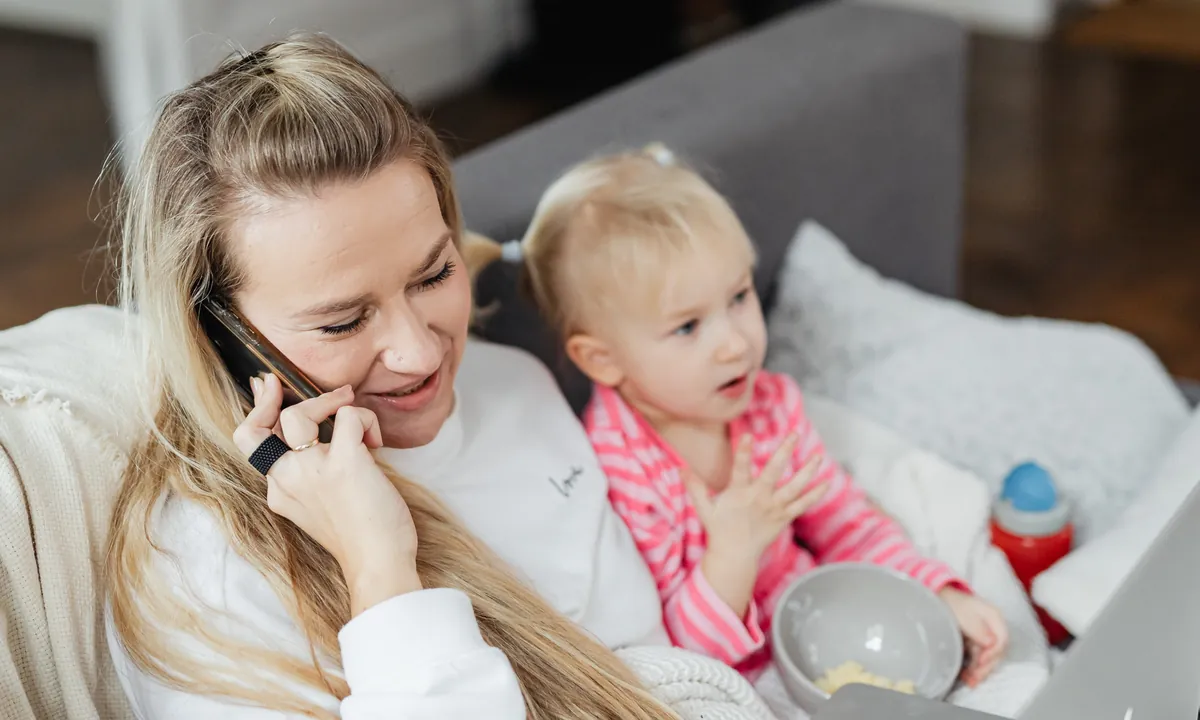
You've read all the articles. You've tried the schedules, the routines, the white noise, the earlier bedtime. You've gotten advice from your pediatrician, your mom, your best friend who swears her baby slept through the night at eight weeks. And still, every night feels like a battle, and every morning you wake up more depleted than the day before.
If that's where you are right now, I want you to hear something first: you are not doing anything wrong. Sleep problems in babies are genuinely complex, and the fact that what you've tried hasn't worked doesn't mean you've failed. It often just means you're missing one or two key pieces of the puzzle that are hard to see from the inside.
That's exactly where a sleep consultant comes in. Here are five signs it might be time to get some professional support.
1. You've Tried Everything and Nothing Sticks
This is the most common thing I hear from families when we first get on a call. They've implemented routines, adjusted schedules, tried different settling techniques, and maybe even attempted a sleep training method or two. Things improve for a day or two, and then fall apart again.
What's usually happening here isn't that the strategies are wrong. It's that something in the foundation is off, and without seeing the full picture, it's almost impossible to identify what. Maybe the wake windows are slightly too long. Maybe there's an inadvertent sleep association that keeps getting reinforced. Maybe two things that seem unrelated are actually connected.
A sleep consultant's job is to look at everything together, not just one piece at a time, and find what's actually driving the problem.
2. Sleep Deprivation Is Affecting Your Daily Life
There's a version of tired that's just part of having a baby. And then there's a version that starts affecting your ability to function, your relationship with your partner, your mental health, your capacity to be the parent you want to be.
If you're at the point where you're crying on the way to work, snapping at people you love, feeling like you're just surviving instead of actually living your life, that's not something to just push through. That's a sign that the situation has moved past normal new-parent tiredness into something that deserves real attention.
Taking care of yourself isn't separate from taking care of your baby. It's part of it.

3. You're Not Sure What's Normal and What's Not
One of the most disorienting things about baby sleep is that it's hard to know what's actually expected for your baby's age versus what's a problem worth addressing. Is waking three times a night at seven months normal? Is a 30-minute nap a short nap or a normal nap? Should a one-year-old still need to be rocked to sleep?
The internet gives you seventeen different answers to every question, and most of them contradict each other. A sleep consultant can give you a clear, honest, age-specific picture of what's going on with your baby and what's actually worth working on.
4. You Want to Make Changes But Don't Know Where to Start
Maybe you know something needs to change. Maybe you can feel that the current situation isn't sustainable. But every time you try to figure out a plan, you get overwhelmed by the options, the conflicting advice, or the fear of making things worse.
This is one of the most valuable things a sleep consultant does: cut through the noise and give you a clear, specific, step-by-step plan that's built for your baby, not a generic template. You don't have to figure out what to try next. You just have to follow the plan.
5. You've Already Tried to Change How Your Baby Sleeps and It Didn't Work
Maybe you read about a method, tried it on your own and, after a few hard nights (or a lot of crying), you stopped. Many families end up thinking their baby is just "not a good sleeper," or that improving sleep simply isn't for them. In most cases, neither of those things is true.
What's more likely is that the method wasn't the right fit for that baby or that family: it was stricter than you felt comfortable with, it started at the wrong time, the schedule wasn't supporting it, or it wasn't adapted to your baby's temperament. That's why I don't work with a one-size-fits-all method. I build a gradual, respectful plan made for your baby, where you stay present, and I support you in adjusting it as we go until it works.
What Does Working with a Sleep Consultant Actually Look Like?
A good sleep consultant doesn't hand you a generic plan and wish you luck. The process starts with a thorough intake, where I learn everything about your baby: their age, their current schedule, their sleep associations, their temperament, your feeding situation, your family's values and comfort levels, and what you've already tried.
From there, I build a plan that's specific to your baby and your family. Not a method I apply to everyone, a plan designed around what will actually work for you. And then I support you through it, adjusting as we go, answering questions in real time, and making sure you never feel like you're doing this alone.
That's the part most families tell me made the biggest difference: having someone in their corner who actually knew their baby and could tell them what to do when things didn't go exactly as planned.
Not sure if working with a consultant is the right next step?
That's exactly what the Discovery Call is for. It's a free 15-minute conversation where we talk about what's going on with your baby's sleep and figure out together what makes sense for your situation. No commitment, no pressure.
👉🏻 Send me a message and let's find a time that works for you
Frequently Asked Questions
What age can I start working with a sleep consultant?
Sleep consultants work with families from the newborn stage all the way through toddlerhood. The approach varies significantly by age. With newborns, the focus is on establishing healthy foundations rather than formal sleep training. From around 4 months onward, babies are developmentally ready to start building more independent sleep skills.
Is a sleep consultant the same as a sleep trainer?
Not necessarily. A sleep consultant looks at the full picture, including schedule, environment, sleep associations, feeding, and developmental stage, and creates a personalized plan. Sleep training is one possible tool within that plan, but it's not always part of the approach. Many families see significant improvement without any formal sleep training method.
How long does it take to see results?
Most families start seeing meaningful improvement within the first week. By the end of a full three-week support period, the majority of babies are falling asleep more independently and sleeping in longer stretches. Every baby is different, but consistent progress is the norm when the plan is well-matched to the family.
Do I have to use cry it out?
No. Cry it out is one approach among many (by the way, one I don’t use!), and it's not the right fit for every family. A good sleep consultant adapts the plan to your values and your baby's temperament. Gentle, gradual methods that keep you actively involved are available and effective for most families.
What if I've already tried everything?
That's often the reason families reach out. When you've tried multiple things and none of them have stuck, the issue is rarely the strategies themselves. It's usually something in the foundation, like timing, environment, or a subtle sleep association, that's hard to identify without an outside perspective. That outside perspective is exactly what a sleep consultant provides.
Sources & Further Reading
The information in this article is based on current research in infant sleep science and child development. Here are some trusted sources if you'd like to read more:
- American Academy of Pediatrics (AAP): Safe sleep guidelines and infant development. aap.org
- Mindell, J.A. & Owens, J.A.: A Clinical Guide to Pediatric Sleep: Diagnosis and Management of Sleep Problems.
- National Sleep Foundation: Sleep associations and infant sleep. sleepfoundation.org
Paula is a certified baby and toddler sleep consultant and mom of three, with a background in speech therapy and child development. Based in Austin, TX, she works virtually with families across the US, Latin America, Europe and beyond, in English and Spanish, to help babies and toddlers sleep better without extreme methods and without mom guilt.
Want a plan made for your baby?
Book a free 15-minute Discovery Call and we'll figure out the best next step for your family. No pressure, no judgment.
Book your free callYou might also like

What Does a Baby Sleep Consultant Actually Do? (Is It Worth Working With One?)
What does a baby sleep consultant actually do, and is it worth it? A step-by-step look at the process, from the first call to three weeks of support.

How I Help Babies Sleep Without Letting Them Cry It Out
Want better sleep without letting your baby cry it out? Here's how I help families with a gentle, responsive, personalized plan where you stay present.

Cry It Out vs. Gentle Sleep Training: What No One Tells You
Cry it out or gentle sleep training? A judgment-free look at what each approach really involves and how to choose the right fit for your baby and family.